
Even after a harsh and sudden correction, Space Exploration Technologies ( SPCX +0.45% ) stock remains above its IPO price of $135. Cathie Wood, the CEO of Ark Invest, has used recent weakness in shares to add to her firm's position in SpaceX.
According to reports, Ark Invest bought 200,000 shares of the popular space stock across multiple ETFs. The combined purchases totaled around $27 million.
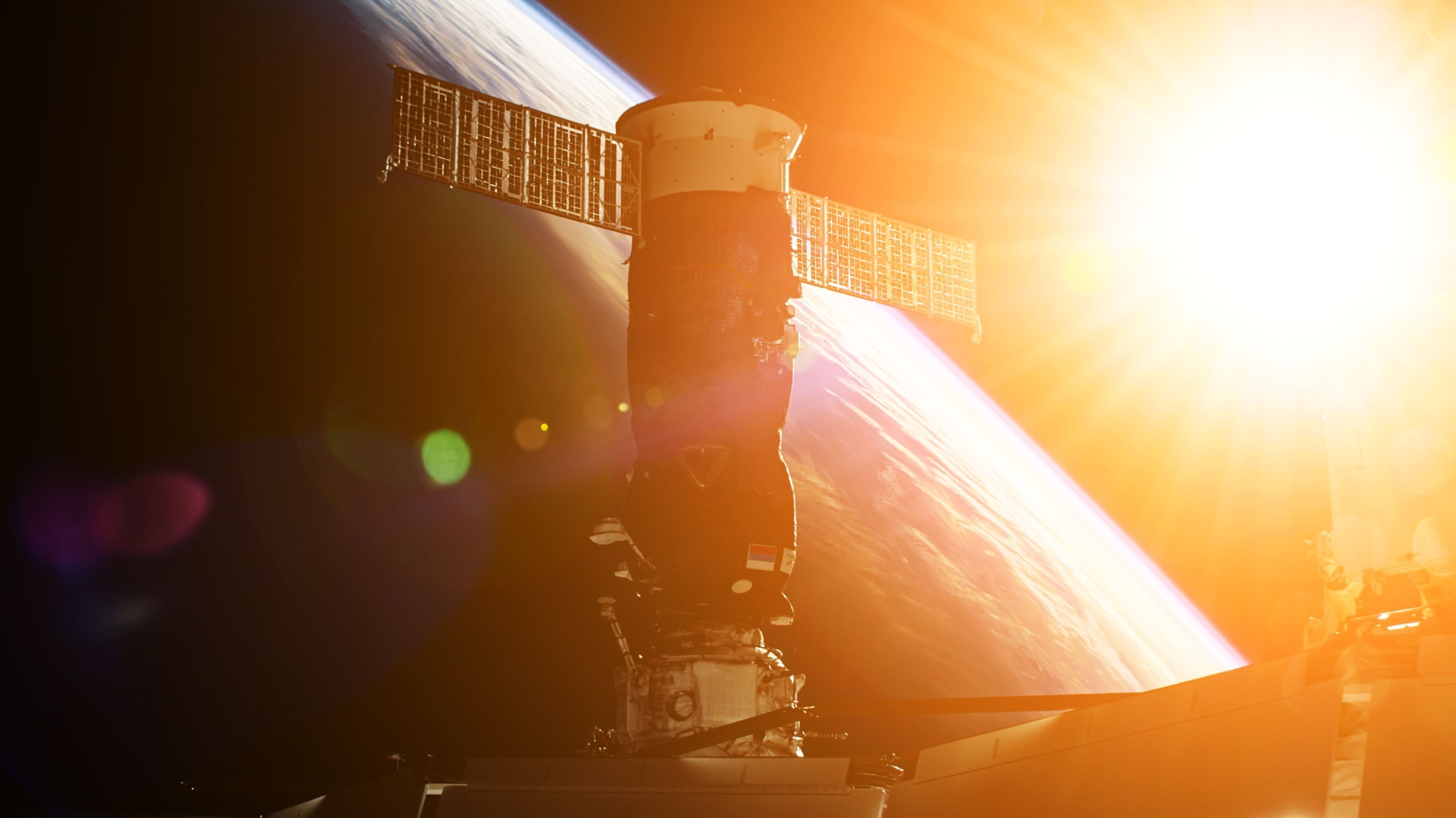
SpaceX is now the firm's second-largest holding, with a position value of roughly $680 million. Ark Invest's largest holding is another Musk-led business, Tesla ( TSLA -1.71% ) . That holding is worth nearly $1 billion.
Why is Wood so bullish on Elon Musk's businesses ? What prompted her to increase her position in SpaceX? The answer is simpler than you might think.
NASDAQ : SPCX
Here's why Cathie Wood loves Elon Musk and SpaceX
Fortunately, Wood often goes public with her investment theses. Therefore, understanding what she sees in a particular investment isn't difficult. Her comments make it clear that there is a direct connection between her Tesla stake and her growing bet on SpaceX.
In 2024, Ark Invest published a detailed report outlining the key drivers of its Tesla investment. The firm predicted a 2029 share price of $2,600. The reasons for Ark Invest's optimism were clear: According to the report, the firm expects that "nearly 90% of Tesla's enterprise value and earnings will be attributed to the robotaxi business in 2029." In short, it thinks autonomous technology will unlock a new era for Tesla.
Autonomous vehicles have long been "just around the corner." Musk himself is famous for his inaccurate predictions on the matter. "I am confident that in less than a year you will be able to go from highway on-ramp to highway exits without touching any controls," he declared in 2014.
It's taken much longer to achieve, but artificial intelligence (AI) can now handle extremely large and complex data sets in real time to make prompt and informed driving decisions. Experts recently polled by McKinsey & Co. believe robotaxis will be a reality "at a large scale" by 2030.
Wood believes the robotaxi market could eventually be worth $10 trillion globally. It is that belief that underpins much of her investment in Tesla. The advent of robotaxis, however, will largely depend on rapid advances in AI. This reality is exactly what has fueled Wood's investment in SpaceX. Ark Invest believes SpaceX will scale profitable ventures like Starlink and reinvest the funds in more speculative AI initiatives.
"Once it completes Starlink's constellation -- in ~2035, according to our base case -- ARK's research suggests that SpaceX could generate ~$300 billion in annual revenue, accounting for ~15% of total spending on global communications," a report from the firm concludes. SpaceX can use those mounting cash flows to pursue orbital data centers, a speculative but high-upside opportunity.
Musk has previously stated his goal of launching 100 gigawatts of AI computing capacity per year. He eventually wants a network of 1 million orbital data centers. Ark Invest is very bullish on the plan. "ARK's research suggests that at sub-$100 per kilogram launch costs, orbital data centers could deliver compute at a cost ~25% lower than terrestrial alternatives without grid interconnection delays, permitting friction, or power scarcity," the firm concludes.
SpaceX's own IPO prospectus agrees that its future hinges not on Starlink development, but on its long-term AI ambitions. The company believes more than 90% of its total $28.5 trillion addressable market deals exclusively with AI opportunities.
At their core, Wood's investment theses for both Tesla and SpaceX hinge on AI growth and execution. Investors, therefore, must be all-in on this vision. Tesla's manufacturing capabilities and SpaceX's launch capabilities should be viewed more as enablers of this opportunity than as opportunities themselves. Without high confidence in AI's potential, an investment in either company likely doesn't make sense.