
Dell Technologies ( DELL -0.05% ) reports its fiscal 2027 second-quarter results on Tuesday, Sept. 1, with a conference call set for 3:30 p.m. Central time. One line in that report interests me more than the revenue number, the earnings number, or the size of the artificial intelligence (AI) order backlog. It's the operating margin of Dell's infrastructure solutions group, the segment that builds the servers powering the AI build-out.
That's because memory prices have been climbing across the chip industry, and the companies that design AI chips have spent recent weeks describing what those costs are doing to their own margins.
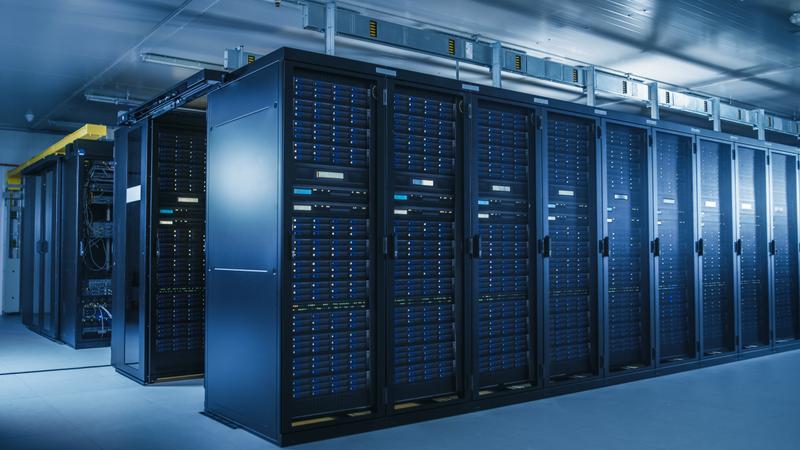
Dell sits further down the same supply chain. It buys memory in huge volumes and assembles it into finished servers. If rising component costs are going to squeeze anyone's margins, the assembler is where the squeeze should show up first.
Tuesday's report gives investors their first good look at the answer.
The margin already stepped down once
Dell's infrastructure solutions group posted record first-quarter revenue of $29 billion, up 181% year over year. AI-optimized servers (machines built around graphics processing units and high-end memory) drove it, contributing $16.1 billion of revenue, nearly double the fiscal fourth quarter's $9 billion. And the company booked $24.4 billion of new AI server orders during the quarter. The rest of the segment grew, too -- traditional servers and networking revenue rose 92% year over year to $8.5 billion, while storage grew 8% to $4.3 billion.
The profitability was more complicated. Segment operating income was $3.1 billion, up 206% year over year, and the segment's operating margin of 10.5% was actually higher than the year-ago quarter's. However, it was down sharply from 14.8% in the fiscal fourth quarter.
Part of that step-down is seasonal. The segment's margin also fell sharply between the same two fiscal quarters a year earlier, from about 18% to under 10%, back when AI servers were less than a fifth of the segment. Much of the rest is mix, not memory. AI servers carry much thinner margins than Dell's traditional servers and storage, and chief financial officer David Kennedy said the AI server business is running in line with its target of a mid-single-digit operating margin.
In other words, when a low-margin product line grows from a sliver of the segment into more than half of it, the blended margin falls even if nothing is going wrong.
That's why Tuesday's number is so useful. The mix effect is known, and management has set the bar itself: Kennedy guided to a sequential improvement in the segment's operating margin this quarter. A margin that rises from the first quarter's 10.5% says Dell is passing its higher memory costs through. One that merely holds, or slips, says some of the bill is landing on Dell.
Management is already repricing
Dell hasn't been shy about naming the pressure. On the company's fiscal first-quarter earnings call in late May, chief operating officer Jeff Clarke described an inflationary environment across memory and other components, and said the company has been adjusting prices frequently in response.
Clarke also named notable commodity constraints, particularly in DRAM and NAND (the two main types of memory chips), as part of a challenging demand and supply environment.
The demand side looks fine. Dell guided second-quarter revenue to $44 billion to $45 billion, up about 50% at the midpoint. The infrastructure segment is expected to grow roughly 75%, including about $15.5 billion of AI server revenue. And adjusted earnings per share guidance of $4.80, plus or minus $0.10, implies growth of more than 100% year over year.
Growth, then, isn't in doubt on Tuesday. What the report settles is how much of it Dell keeps while one of its most important inputs gets more expensive by the quarter.
NYSE : DELL
What would a good answer look like?
I'd watch three things. First is the segment margin itself. A number above 10.5% says pricing power is holding, and one at or below it says it isn't. Second is the companywide gross margin, which fell to 17.8% in the first quarter from 21.1% a year earlier, largely on the AI mix. Another sharp drop there suggests costs are outrunning prices. And third is any updated commentary on memory, because Dell's guidance for the rest of the year assumes the repricing keeps working.
Shares trade near $461 as of this writing, at about 26 times the adjusted earnings management has guided to for this fiscal year -- arguably a full price for a hardware business, and one that assumes the AI growth stays profitable.
I think Dell probably passes the test. Management saw the memory problem early and started repricing months ago. But the margin line is the test, and the answer arrives Tuesday. I see no reason to guess a day early.